
 |
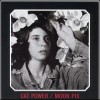
Chan Marshall has been releasing music under the moniker Cat Power since 1994, working with the likes of Steve Shelley (Sonic Youth) and Mick Turner (Dirty Three). Moon Pix follows a two year recording hiatus during which Marhsall quit playing music for a few months after some frightening emotional times. To say that this record is "gripping" wouldn't be touching a deep enough nerve. Five of the album's eleven songs were written immediately after Marshall awoke from a nightmare. It is with this kind of intensity that Marshall opens the floodgates to her emotions - approaching a specific moment, playing with it, polishing it and then placing it back upon the shelf. Marshall's spirituality colors Moon Pix. Raised in the south in a religious family, Marshall moved to New York City at the age of 20. This odd geographic transition is reflected in Marshall's edgy, insecure view of the world, creating a creepy deja-vu aura that smothers this record like a glove. Musically, Cat Power shares much in common with Smog, P.J. Harvey's "4-Track Demos," and Thrill Jockey's "country" artists. But to say that this record is a blues record or a folk record is really too limiting. Moon Pix transcends categories by simply placing the emphasis on mood. As a result, the songs are more reminiscent of traditional gospel songs than any contemporary musical genre. Restraint is not a word in Marshall's vocabulary; breathtaking, however, is. One of my friends once said that a certain song made his spine tingle the way "The Star Spangled Banner" was supposed to but never did. Moon Pix is my example. When Marshall sings "I could stay here, become someone different. I could stay here, become someone better," I reach for the repeat button on my CD player. Those are words to live by, folks. - Roy Ewing
|
79. Pedro The Lion - It's Hard To Find A Friend (Made in Mexico, 1998)
 |
After hinting at greatness to come on 1997's Whole EP, Pedro The Lion breathed contemplative life into their understated debut full-length a year later. On It's Hard To Find A Friend, singer / guitarist David Bazan backed himself with friends Josh Golden and Ben Brubaker, favoring subtlety and substance over style and flash. Musically, the album rarely exceeds rudimentary techniques but the simple strum and shuffle belie and even showcase the songwriting depth and self-examination Bazan explores. From the opening escapist call to the closing affirmation, he's woven a tender tapestry of confessions and parables to reveal that while finding a friend may be hard, the discovery comes from merely looking. - Curt Beery
|
78. Frank Black - Teenager Of The Year (4AD, 1994)
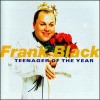 |
Perhaps one of the boldest things a musician can do is make music so epochal that years after it continues to be a part of the air like the gush of endless, uncontrollable feedback from a damaged guitar and then almost completely ignore it, changing their sound and their approach all before the perplexed faces of their admirers who shift impatiently in their seats and vocally express dissatisfaction with the new direction. Since the breakup of the Pixies, Frank Black has been altogether tossed aside and marginalized, thought of as a "former" talent of note who didn't have the good sense to either keep the old band going, die, or simply never attempt a real follow-up ala Syd Barret or Kevin Shields. It's a tough position to be in and Frank Black certainly didn't help his case with his 1994 album, Teenager of the Year, one of the oddest, most exhilarating, most overlooked pop albums of the decade. Dense and sprawling, the record features a daunting twenty-two songs with odd, synthetic production, and melodic ideas that make the listener work to find them like diamonds buried in snow. This isn't the album one makes if they're trying to appease old fans or even win new ones, for that matter. There's something gloriously personal about it. It has the atmosphere of being made by a half-crazy, rock n' roll freak and science enthusiast working all alone obsessively in a studio not paying a second of thought to the reactions of a possible audience. The lyrics, even at their strangest, are some of Black's most heartfelt. He writes about CB radios, Three Stooges films, and mall openings in a way that invests them with mystery. His characters - the lonely UFO enthusiast of "The Vanishing Spies," the kid who gets hassled for his "uncool" taste in music at hip record store in "Freedom Rock" - are given dignity and grace for just being who they are. This isn't the Pixies. It's deeper and somehow stranger. The scope of the album is at once large and small. It's the work of a cultural sponge and an obsessive observer. Ultimately, what Teenager of the Year is about is the realization that everything around you, no matter how mundane, is worth having a song devoted to it. There are secrets and stories everywhere. You just have to pay attention. - Oliver Kneale
|
77. Castor - Castor (Mud, 1995)
 |
In an era where mass produced efforts and commodities are abound, Castor produces one of the most memorable albums riding on exactly the opposite hopes and desperation. This album encapsulates a dark, brooding atmosphere that rings true with the pockets of fans the band has formed in their short years of existence. Castor never quite reached the prominence of friends C-Clamp and Hum, but those who know their songcraft best won't soon forget the live performances and short-lived career of a band that never substantially received due credibility. In that statement also lies the beauty of not only Castor's music and mystique, but the message on the receiving end that will ring true for years to come. - Shawn Schultz
|
76. Primal Scream - Screamadelica (Sire, 1991)
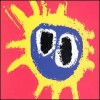 |
The most visionary, inspired, and inspiring album of the decade, and if you don't believe that, you probably don't dance. Screamadelica has it all: big tunes, big sounds and great big pupils staring right into the sun. Where other people saw rock music and pop music and dance music and reggae music Bobby and the gang saw Music, and for one glorious hour they made the possibilities realities, making the record Brian Wilson and Lee Perry and Keith Richards and The Orb could never have made together. Lovingly sequenced, bursting from its packaging, and drifting somewhere free of time, Screamadelica set a whole new agenda, and it still sounds like a gift from the heavens. - Jesse Fahnestock
|
75. Tori Amos - Little Earthquakes (Atlantic, 1991)
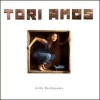 |
Few albums change lives like Little Earthquakes. Nearly everyone I
know who's around my age went through a Tori phase at some point in their
lives. Myself, the first girl I ever truly fell in love with loved Little
Earthquakes, and through her, I learned to love it as well. Now, I'm
guessing that you have a copy of it buried somewhere in your music
collection-- if you do, take it out right now and listen to it again. Think
back to what it was like to be a scared, confused teenager hearing it for
the first time. Realize how well you can recall every lyric you quoted in
old love letters or diary entries. Dated production values aside, there
isn't a single less-than-perfect moment on this album; every song radiates
so brightly with cathartic power that you may think you'll be burned if you
get too close. But that's the point of Little Earthquakes: to get too
close, to throw yourself into the flames and emerge scarred and cleansed and
reborn. You've taken the leap before; don't be afraid to take it again.
- Nick Mirov
|
74. Drive Like Jehu - Yank Crime (Interscope, 1994)
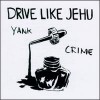 |
At a time when complex but loud music was becoming all the rage in the midwest,
Drive Like Jehu were in California. Just when a family of indie labels that
would successfully market this music was cropping up, D.L.J. were signed to a
major. After their second and best record, Yank Crime, Drive Like Jehu split up
so their guitarist could concentrate on a band whose greatest contribution to
western culture so far has been a song called "Dick On A Dog." Life ain't fair.
Actually, Drive Like Jehu were fully aware of this, melding their furiously
original sound with lyrics that railed against conformity and apathy. The album's
centerpiece, a cyclical guitar hook building into emo-core frenzy called "Do You
Compute," made guitar chops in hardcore cool back when At The Drive-In's afros
were barely an inch high.
- Western Homes
|
73. R.E.M. - New Adventures In Hi-Fi (Warner, 1996)
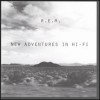 |
Sure, there are some cranks that say R.E.M. started sucking immediately after
Reckoning, and...wait, I'm one of those cranks! Well, it's difficult for me to
do a write-up for this album seeing as I hate it, but I can see how some other
people might not see it that way. With '90s R.E.M., you have the choice of
hearing a complacent bunch of middle-aged celebrities resting on their laurels
(Out Of Time), trying pathetically to "rock out" (Monster), trying even more
pathetically to "reinvent themselves" (Up, oh please do not make me go in
to how much I hate this record), or just plain moping (Automatic For The People… the
best of a bad lot). And then you have New Adventures In Hi-Fi. Rich band
records album for no reason other than they're rich and they can. And they can get
Patti Smith to appear on it. And they have this new keyboard they want to try
out. Uh... my mom likes "How the West Was Won and Where It Got Us." The
incessant noise on "Leave" irritated me enough to actually figure out which
song it was. The rest of the record? I think I listened to it twice. Then I put
it on a shelf somewhere and stopped paying attention to R.E.M. altogether. (A
good move on my part.) Wait, wasn't I saying other people might like this
album? Ah, yeah, because...well, I guess if you're going to have to listen to a
bunch of burnouts, you might as well listen to the album they put the least
effort into, because it's most likely the one closest to what they actually
would sound like if they weren't being propped up by all the production major
labeldom can buy.
- Western Homes
|
72. The Dirty Three - Horse Stories (Touch and Go, 1996)
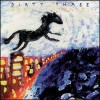 |
A hand is drawn slowly, lingeringly, across some very old, beginning-to-calcify
guitar strings. Brush hits drumhead... barely. And Warren Ellis, who somehow
makes the violin a gritty instrument, pulls his bow... gently,
now... perpendicular to string, his left hand deftly manipulating the tone from
a drone to a yearning obbligato. For the rest of Horse Stories, no other
instruments (some wordless vocals, later, but off in the background, and
besides the point) will disrupt the interplay between guitar, instrument of
this century, violin, instrument of the past, and drums... sure, why not,
instrument of the next century. Mick Turner gets better sounds out of his
guitar by accident then I've ever been able to produce out of mine after hours
of trying. Jim White plays drums like no one else I've ever heard, somehow
conjuring a blizzard of tones from a handful of struck objects. "At The Bar,"
in its leisurely majesty, is music I always wanted to hear, but didn't know
until it began. The old folk cover "I Remember A Time When Once You Used To
Love Me" could have been left untitled, the words will come uncalled when you
listen to the song. This might be the best (computer unassisted, sorry, Tortoise)
instrumental record ever made.
- Western Homes
|
71. Braid - Frame And Canvas (Polyvinyl, 1998)
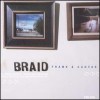 |
Hailing from the highly influential and prolific Champaign-Urbana scene,
this four piece was one of the early innovators who helped to spawn the now
ubiquitous genre known as "bad emo". Don't hold it against them though,
because these guys were anything but. Known for their dueling syncopated
vocals and guitars, emotional but intelligent lyrics, and highly intense
live shows, this band had the stuff to perhaps one day make a major impact
on the charts. Unfortunately, it never worked out that way. They broke up,
leaving fans with three solid albums and a host of EP's and singles to
remember them by. Frame and Canvas, their final effort, is also their best
and most consistent, and seems to be able to capture some of the energy of
their legendary live set better than their previous two albums could.
- Jared Dunn
|
