
 |
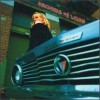
After Icky Mettle became the bible for a thousand disaffected
indie-rock boys with guitars, it seemed as if the Archers of Loaf had no
choice but to continually fall short of expectations and eventually
self-destruct. It was the fact that they willfully did so, sabotaging
themselves at every turn, that made them truly great. Everything on Vee
Vee sounds wrong - the rambling, out-of-tune guitars spewing go-nowhere
riffs, the eternally bitter lyrics, tuneless noise screes like "Nostalgia",
the annoyingly dinky and repetitive coda "Underachievers March and Fight
Song" - and yet, even though the Archers dared you to hate them, you loved
them all the more for it. - Nick Mirov
|
49. Mineral - The Power Of Failing (Crank!, 1997)
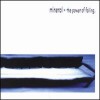 |
Mineral is a band that many a time is taken for a band that emulates Sunny Day Real Estate's artistry better than any other. Yes, this is indeed true, but Mineral has also handed us a painfully good album that has made its way into the hearts and hands of many. Mineral spawned a generation of bands that look ahead without ever turning back. Mineral breathed fresh air into the independent music community on end, and although not completely original, changed the scene of things to come. One band did all of this. - Shawn Schultz
|
48. PJ Harvey - To Bring You My Love (Island, 1995)
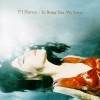 |
To Bring You My Love, a meditation on the pain inherent in love and faith, remains one of the most harrowing, uncompromising albums ever recorded. PJ Harvey's first solo recording finds her abandoning the spare, stripped-down nature of her first two albums in favor of a blues-driven sound steeped in myriad textures and colors. "Down By The Water" was the hit, but "C'Mon Billy" and "Send His Love To Me" are at least its equals. And the album's closing track, "The Dancer," with its dark images laid out over haunting organ melodies, is the best thing PJ Harvey has ever done. - Devon Reed
|
47. Superchunk - Foolish (Merge, 1993)
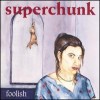 |
It's hard to run fast and loud music into the ground, but the first three
Superchunk records nearly accomplished it. Not that On The Mouth, No Pocky For
Kitty, and Superchunk were necessarily bad records; it's just that underneath
the howling guitars and squealing vocals of "Precision Auto" and "Slack
Motherfucker," we could hear a much better band waiting to get out. "Like A
Dream" announces Foolish as the arrival of the new Superchunk, one that can
rock lilting, undistorted arpeggios just as hard as fuzz bass and shout-along
choruses. "Driveway To Driveway" and "Stretched Out" are brilliant songs of
post-college ennui, revealing a newfound maturity relieved by the old-school
rockout of tunes like "Water Wings" and "Saving My Ticket." "Slack
Motherfucker" gave Superchunk a name, but it was Foolish that gave them a
career.
- Western Homes
|
46. Bjork - Post (Elektra, 1995)
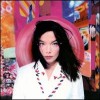 |
Being quirky works for Bjork, but it wasn't going to sustain her for more than
one album careerwise. After some severely goofy Sugarcubes records and the
video for "Human Behavior," where she is eaten by a giant stuffed bear, our
favorite Icelandic prog-pop pixie got serious, hooked up with producers like
Tricky and Graham Massey, and released Post upon an unexpecting world. The
frightening thing about this record is not how it not only forces you to
swallow some of the oddest sounds ever presented to the listeners of "popular"
song, it's how it makes you like it. "Hyper-Ballad" and "Army Of Me" sound like
no kind of pop I've ever heard, but they work chillingly well. "It's Oh So
Quiet" Bjorkifies Big Band music, and just like Post, "starts another big
riot."
- Western Homes
|
45. Archers Of Loaf - All The Nations Airports (Alias, 1996)
 |
I've been a fan of A.o.L. since Icky Mettle was released in 1993, and have continued to buy every record they put out as close to release day as possible. I had to wait for this one, though. None of the local stores bothered to order copies of it. Three long weeks later, I was finally able to get my hands on a copy. To be honest, I was very disappointed. Gone were the rambling anthems and the disjointed energy only to be replaced by droning quieter numbers and sonically dense mini-epics. It took a full two years to finally grasp what was going on with this record, but when I did... oh boy was it good! It's one of the very few records this decade that's actually an album. By "album," I mean that it works much better as a whole piece rather than split up into singles. Viva la A.o.L.!
- Roy Acorn
|
44. Portishead - Dummy (Go! Discs, 1994)
 |
Think about sex. Ok, that isn't difficult, I know. Think about the most passionate lovemaking you can imagine. Well, that's a little tougher. Now imagine it happening on one of the worst days of your tragic love-lorn life. This is Portishead's Dummy, glowingly lusty, yet somehow desperate and sad, and consequently one of the '90s' great musical paradoxes. It's serene, but it's tense. It's dark, but it's enlightening. How could the instrumentation (loops, turntables, bass, drums, guitars) elicit such dizzying thoughts - dimly candle-lit rooms... hands, skin, and sex. - but have lyrics woven within that could drive one to seclusion or dressed-in-all-black street walking? Dummy 's vocals are like a black and white jazz-bar performance, or like a frightened girl in a corner. This record opened eyes, and ears to what's been coined "trip-hop" in the music superstore plastic-card-with-label world, and deserves every bit of attention
it's been given. 21st century music with early 20th century influences released in 1994.
- Keanon Liggatt
|
43. Mogwai - Young Team (Jetset, 1997)
 |
In a largely faceless and emotionless genre of instrumental music dubbed "post-rock" for reasons unknown, Young Team was an epiphany. It proved that this music could be more than mere study music or something to zone out to, and that it could overwhelm the senses and control your stereo as well as anything else. "Mogwai Fear Satan" with its 16-minute ride through a passing thunderstorm stands as one of the most triumphant songs I've ever heard. In fact, I try to put it on in the apex of any major storms so that the two forces can work together, and when the rain is dying down, I'll switch to more drizzle-inspired numbers such as "Tracy" and "R U Still In 2 It." If the storm threatens again, "Katrien" or "Like Herod" will call for me with their slightly more aggressive tones. - Sebastian Stirling
|
42. Codeine - The White Birch (Sub Pop, 1994)
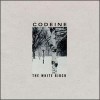 |
Generally there is some association between slow-core and lack of volume. Codeine did not know of this association, as The White Birch may feature glacial tempos, but every once and awhile, one of the mountains that it's moving will collapse in a blast of deafening thunder. This thunder is not aggressive; it is the mere click of a distortion pedal in the continuing bastion of bewildered malaise that Codeine prescribes. This is an album that calls for you to listen to it when you're sick in bed or mildly down. The images of the area of emotion so close to sadness but staying away from overt depression will make you appreciative of your comparatively minor condition. - Sebastian Stirling
|
41. A Tribe Called Quest - The Low End Theory (Jive, 1991)
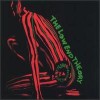 |
The Low End Theory begins with a history lesson and ends with a bomb dropping
realization, perhaps five years before it became obvious to everyone else,
that hip-hop culture was becoming music culture, for blacks and whites
alike. In a time for rap where the gap between what was popular (M.C. Hammer) and what
was "street" (N.W.A.) seem cavernous, Tribe did the impossible and made an
accessible, friendly hip-hop record that was 100% real. Q-Tip and Phife locked
flow, Ali Shaheed Muhammad selected the best beats from a century of jazz, and
guests like Busta Rhymes and Brand Nubian showed up to help things along.
"Scenario" might be the best group throw-down in hip-hop history.
- Western Homes
|
