
 |
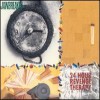
It's impossible to deny: a countless amount of young people have grown up influenced by Blake Schwarzenbach's lyrics and Jawbreaker's scrappy mix of pop, punk, and emo / hardcore, whether it's in the form of bad poetry or a shitty emo / punk band. Many have tried and few have come close to capturing the mystique surrounding Jawbreaker. They had an amazing sense or who they were and what they were doing, and through music helped many of my generation find a way to define and express themselves. This album is considered by most to be the group's creative peak, more defined than earlier works and more fun and intense than the later. I think I speak for all fans when I say thanks for everything, Jawbreaker. - Ben Kahn
|
29. Yo La Tengo - Electr-O-Pura (Matador Records, 1995)
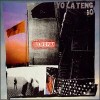 |
After the strong and unified Painful, Yo La Tengo's sound splintered again and
headed off in about ten new directions, each of which gets its own spin on
Electr-O-Pura. "Tom Courtenay" borrowed more than a little from Pavement,
"Flying Lesson" had a tiny bit of Sonic Youth instilled in it, and "My Heart's
Reflection" almost sounded like something U2 might have cooked up. But the band
remained too humble, too unique, too New Jersey to make any of these borrowings
sound like plagiarism, and "Blue Line Swinger" and "Pablo And Andrea" floated
like clouds, with Ira Kaplan's guitar fighting with Georgia Hubley's cooed
vocals for the Most Beautifully Confused award.
- Western Homes
|
28. Fugazi - Repeater (Dischord Records, 1990)
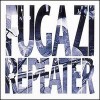 |
If they burned pure grain integrity right on to vinyl, it still wouldn't be as
good as Fugazi. Repeater has become as much a cultural artifact as a hard-hitting
classic, with bands as diverse as Pearl Jam and Pansy Division claiming them as
inspiration. Each tune on Repeater is a new anthem for the nation of
dispossessed Fugazi called its own to chant "You are not what you own!" "We
hope we don't get what we deserve!" And most simply and most primal, "1, 2,
3, REPEATER!"
- Western Homes
|
27. Wu-Tang Clan - Enter The Wu-Tang: 36 Chambers (Loud Records, 1993)
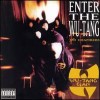 |
Visceral. I mean like punch-to-the-face visceral, not just a faux-brazen movie shot in a sound stage
designed to look like the gritty inner city.
Street hip-hop that those weaned on indie guitars could step to immediately and with authority, Wu-Tang Clan saved us from what could have been
a decade of chopped-up Dre rehashes and player-haters. Instead we got a decade
of chopped-up RZA rehashes and samples from kung-fu movies. Regardless, Enter
The Wu-Tang is a grimy masterwork, with its nine master MC's dropping
science so smoothly it barely sounded like they were even trying.
- Western Homes
|
26. Hum - Downward Is Heavenward (RCA, 1998)
 |
Although they've spent the majority of their career a square peg in a round
hole, Hum's monolithic but deeply personal brand of loud guitar rock worked too
well to dismiss the band despite its failure to succeed commercially. They were
a band who appealed mostly to folks of indie tastes -- signed to a major. Their
lyrics were abstractions of the most confessional and touching level -
delivered over a smart loud thud that Black Sabbath would appreciate. So
tragically few got to hear Downward Is Heavenward or its more diffuse
predecessor You'd Prefer An Astronaut, two works of concentric spiral
guitar and heartfelt monotone singing that made cultists of everyone who heard them right.
- Western Homes
|
25. Neutral Milk Hotel - In the Aeroplane Over the Sea(Merge Records, 1998)
 |
An elusive dream biography of Anne Frank rife with Holocaust imagery and stories of impossibly doomed romance shouldn't be as uplifting as this, Neutral Milk Hotel's profoundly moving second album, manages to be. It starts with incandescent scene-setting, images of youth and sexual discovery in an afternoon bedroom while parents in the other room sit rotting from the inside out, crushed by life, abusive to one another, and weighted down with suicidal hopelessness. It's a fascinating scene, sung and played with a folk-pop melody so gentle and effortless that it barely stirs the dust on the floor or sways the curtains in the bedroom. And from there the album glides into a very special kind of storytelling. It seems to fly back and forth through time. Images of war, death, sex, and spiritual connection jump from the lyrics like rapidly blooming flowers. We get bursts of overdriven, distorted acoustic guitars, singing saws that moan like ghosts, and arrangements that sound like they're being played by a psychedelic cartoon marching band. Each sound is a living nerve. We hear the story of the "Two-Headed Boy" and his romance tempered by insecurity and perhaps delusion. Jeff Mangum pushes him along and reads his thoughts like an understanding angel. We ache and shiver with him. We hear about the girl's death amidst the bullets and explosions of war and we stare at the empty rooms where she and her family once lived. From there the album twists and turns deeper into the fantasy, every word and sound chilled by snowfall and lit up with ghosts. And through all of the misery, death, bloodshed, and heartbreak present on the album there is a trace of hope. There's a defiant optimism here that, through some magic, manages to be realistic rather than naive. Perhaps it's the acknowledgment that after the world has fallen apart one really has no right to do anything else but survive and that that responsibility is a good thing. Or maybe it's the idea that all human experience is one lasting hum, not limited by time or death and that everything you could possibly go through has been lived through and pondered over a thousand times before and that's an idea that you can take some semblance of comfort in.
- Oliver Kneale
|
24. Polvo - Exploded Drawing (Touch & Go, 1996)
 |
Certainly the strangest band to come out of the early nineties Chapel Hill scene, Polvo's approach to guitars has always been to strangle the most off-kilter melodies out of them. Exploded Drawing is their most ambitious work, a minute shy of an hour and filled to the brim with twists into previously uncharted territory. While it's a mighty task to ingest this much Polvo in a sitting, the songwriting has renewed focus, and nothing on here gives me vertigo like Today's Active Lifestyles did. The world-ending closer, "When Will You Die For The Last Time In My Dreams," is as all encompassing as its mouthful of a title suggests. - Sebastian Stirling
|
23. Fugazi - In on the Kill Taker (Dischord Records, 1993)
 |
What a record! It's six years old now and still gets listened to around my house on a very regular basis. If, for some unknown reason, there's actually a person out there not familiar with the work of this band, I'd recommend beginning your collection with this one. It's the perfect midway point between old punky Fugazi and newer experimental Fugazi. Way ahead of its time in both vision and execution. - Roy Acorn
|
22. Shellac - At Action Park (Touch & Go, 1995)
 |
In Silkworm's live version of "Slipstream" off Every Chicken Finds a Kernel of Corn Now and Then, Tim Midgett freestyles the bridge with jokes about Steve Albini, and ends it with "You've got to lighten up and take it easy." After being in Big Black and Rapeman, this is certainly not a great leap into the realm of twee-pop, but it is slightly more-accessible than the grinding assault of his 80's output, with key performances from the all-star rhythm section of Bob Weston on bass (Yes, another person who engineers hundreds of albums a day) and Todd Trainer on drums providing the geosynchronous backbone.
- Sebastian Stirling
|
21. Belle and Sebastian - If You're Feeling Sinister (The Enclave, 1996)
 |
The Simon and Garfunkel tag must be one that Belle and Sebastian are itching to get rid of, as the first time I heard them, I made the association, and when we were dishing out albums, Western Homes asked "Who gets Belle and Garfunkel?" There's much more than a reestablishment of 60's styled folk on this album; they are a seven-piece band and the lushness from having horns, strings, and piano brewing is a large key. The sly sense of humor in tracks like "Seeing Other People" mixes nicely with the hushed focus of
"The Fox in the Snow."
- Sebastian Stirling
|
